
Maria Tallchief Quarter: Is it Rare or Not?
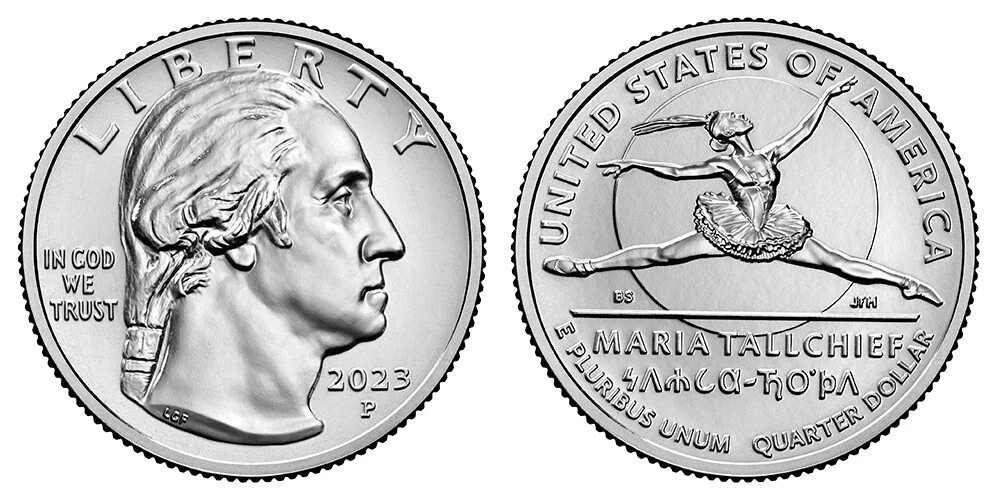
Maria Tallchief, America’s first prima ballerina, is not rare in its standard circulating form. Is important to know that the distinction between an ordinary one and a numismatic rarity is vast. Millions of items exist, but only several high-value S varieties and mechanical defects are rare in 2026.
Circulating Mintage vs. Collector Scarcity
The following data compares the massive circulation figures of the Maria Tallchief quarter against the restricted numbers produced for the numismatic market.
Type | Mint Mark | Mintage | Scarcity Level |
Circulation | P | 185,800,00 | Common |
Circulation | D | 184,800,00 | Common |
S-Mint Clad | S | 502,200 | Scarce |
Clad Proof | S | 593,245 | Scarce |
Silver Proof | S | 269,709 | Rare |
The Philadelphia and Denver Volume
The United States Mint produced over 172 million Maria Tallchief quarters for general circulation across the Philadelphia and Denver facilities. Because of these massive numbers, any circulated coin found in a vending machine or bank roll is generally worth only its $0.25 face value. These coins were designed to be used, not hidden away, which keeps their supply high and their rarity low.
The Low-Mintage S Varieties
The San Francisco Mint presents a different story. Unlike the P and D strikes, S quarters were never released for general commerce. They were sold only in Mint sets or three-coin rolls.
With mintage figures often hovering around 1 % of the circulating total, these are the true rarities of the standard design. In today’s market, a pristine S-Mint uncirculated quarter is a target for collectors aiming to complete a full set.
Rare Quarter Errors
In the market, there are three main quarter defects that change the price. Below is a full error list.
The In Cod We Trust Strike-Through
This is the most famous error in the series. It occurs when machinery grease fills the letter "G" in "GOD" on the obverse, making it appear as a "C." For clear identification, look for a clear "C" or a completely faded "G." Often, the "T" in "IN" or "TRUST" is also weak or missing.
Average Value $45–$120
High Value $300–$400
The Extra Feather / Leaking Shawl Die Chips
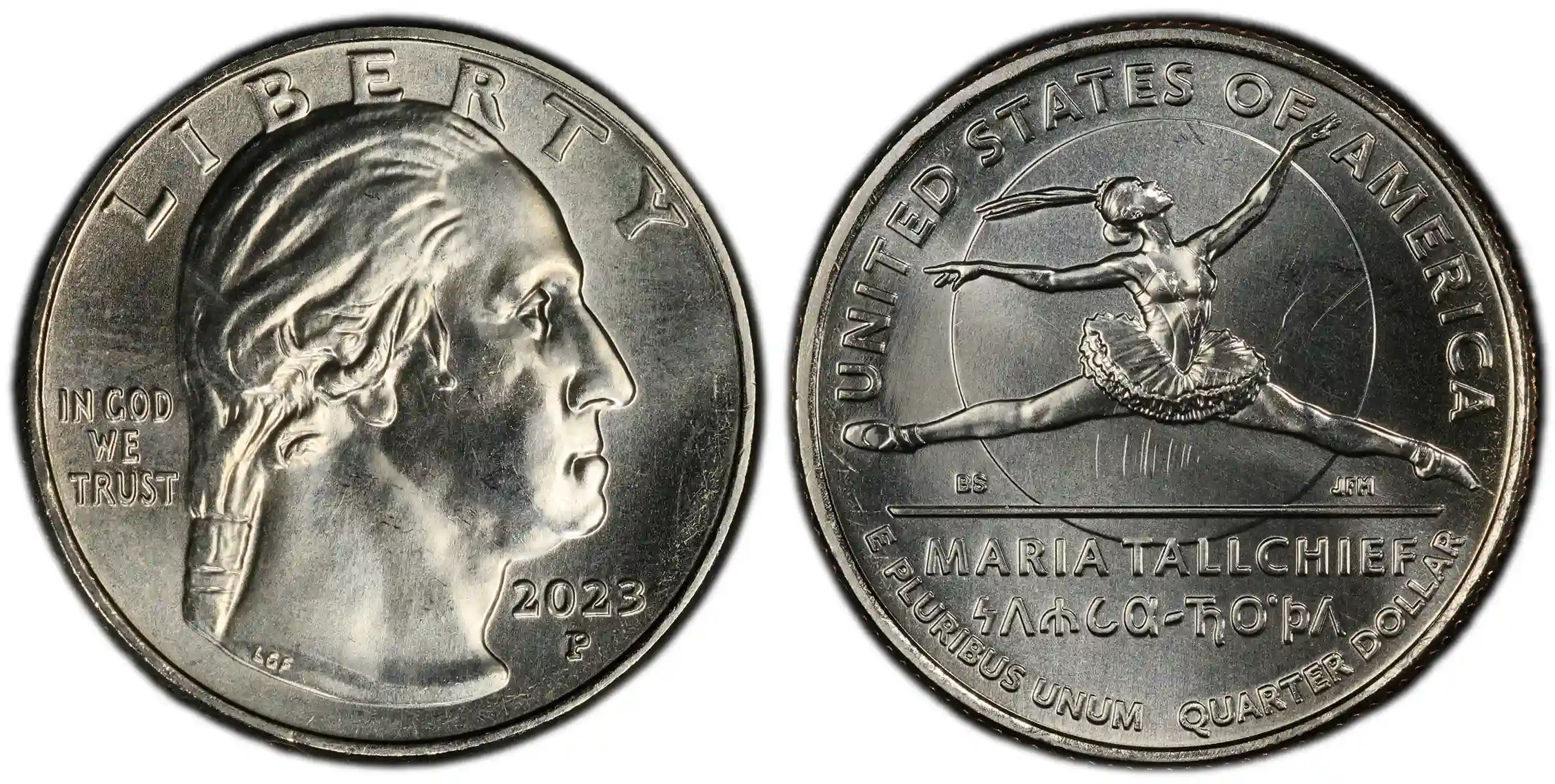
Die chips occur when a piece of the steel die breaks off, allowing extra metal to flow into the gap during striking. Look at the reverse design where Maria Tallchief’s shawl meets her head and shoulder. A common chip creates what looks like an "Extra Feather" in her hair or a "Leaking Shawl" effect where metal "blobs" appear on her costume.
Value $5–$160
Die Trails and Hub Doubling
Die trails are distinctive streaks that trail off the letters or design elements, caused by the movement of the die during the striking process. For the identification, check the most noticeable on the letters of "MARIA" or the designer's initials "BS."
Value $150–$250
Other Quarter Defects
In God We Trust Defect – Value $45–$400
Extra Feather Chip – Value $10–$160
Leaking Shawl Chip – Value $50–$125
Die Tails – Value $150–$250
Broadstrike – Value $20–$80
Off-Center Strike – Value $175–$350
How to Identify a Rare Maria Tallchief Item
The first identification step is to know the basic item characteristics. Below is the table with important details from the best coin identifier app.
Composition | 91,67 % Copper |
Weight | 5.67 grams |
Diameter | 24.26 mm |
Thickness | 1.75 mm |
Edge | Reeded |
Check the Obverse for the S Mint Mark
To determine rarity, first check the Heads side of the coin. Look to the right of George Washington's portrait. If you see an S, you have a collector-only coin. These should be kept in a protective flip or capsule immediately to prevent surface scratches, as their value is entirely dependent on their Proof or Uncirculated luster.
Analyze the Two Standards Reverse Design
The reverse features the Osage orthography Wa-Xthe-Thoṉba. Rare varieties often show hub doubling on these letters. Use a 10x magnifying loupe to inspect the edges of the Osage text; if you see a secondary ghost image of the letters, you may have found a rare Doubled Die variety that hasn't yet hit the mainstream price guides.
Is the Quarter a Good Investment?
Whether a Maria Tallchief Quarter is a good investment depends entirely on which version of the coin you are holding. In the current market, the vast majority of these coins are common, but three specific categories show growth among numismatists.
MS-67+ Items
Standard Philadelphia P and Denver D quarters found in your change are generally worth only $0.25. However, because these coins were shipped in heavy bags, they are easily scratched. For the investment, professional grading is the differentiator here. A Maria Tallchief quarter certified by PCGS or NGC as MS-67 has recently sold at auctions for $40 to over $175.
Silver Proofs
These were never intended for circulation and were sold only in limited-edition Silver Proof Sets. These coins have intrinsic floor value because of their silver content, plus a numismatic bonus because of the low mintage.
With a mintage of only around 270,000, these are roughly 700 times rarer than the coins in your pocket. Current market prices for a PR-70 Deep Cameo piece range from $115 to $160.
Investment Potential Summary
Circulated Clad – low risk level – poor investment outlook
Silver Proofs – low risk level – good investment outlook
MS-67 – high risk level – excellent investment outlook
Major Defects – moderate risk level – speculative investment outlook
Maria Tallchief Quarter Coin Care
The major rule is never clean your coins and download the Coin ID Scanner.
Avoid Polishing – never use metal polish, baking soda, or toothpaste. These contain abrasives that create microscopic scratches (hairlines), which professional graders like PCGS or NGC will immediately flag as Cleaned and reduce the value to almost zero.
Chemical Hazards – avoid using vinegar or lemon juice, as the acid can etch the delicate manganese-brass cladding or the 99.9 % silver surface.
Safe Emergency Rinse – if a coin has loose dirt or PVC residue, you may soak it in 100 % pure acetone (from a hardware store, not nail polish remover) for a few minutes. Rinse with distilled water and pat dry, never rub, with a soft microfiber cloth.